
OEM & Private Label Surgical Instruments: Complete Guide for Distributors
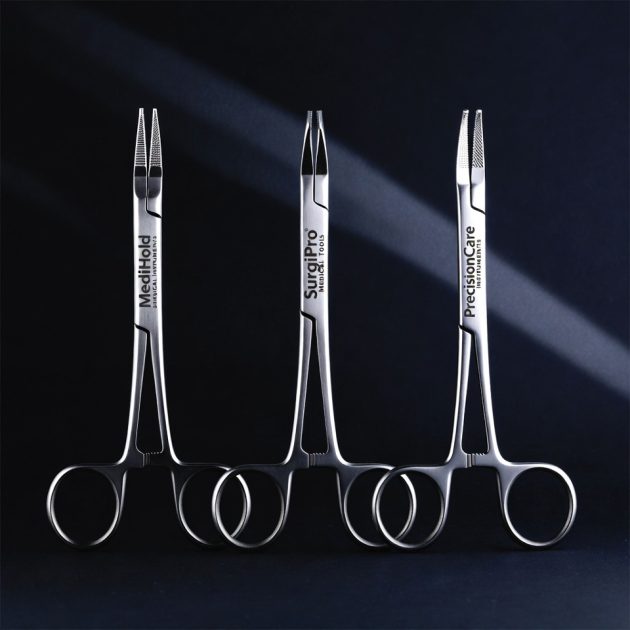
Many of the leading surgical instrument brands sold in the USA, UK, Germany and Australia are manufactured in Sialkot, Pakistan — rebranded and sold at 3–5× factory price. This guide explains exactly how OEM and private label instrument manufacturing works, what it costs, and how to start.
OEM vs Private Label: What's the Difference?
- OEM Manufacturing — You specify the instrument design, dimensions, and specifications. The manufacturer produces to your exact spec — potentially a unique design not in their standard catalogue. Higher MOQ, longer lead times, tooling investment.
- Private Label — You select instruments from the manufacturer's existing catalogue. The manufacturer applies your logo, brand name, and packaging. No new tooling needed. Lower MOQ, faster turnaround. Fastest way to launch a branded instrument line.
MOQ and Lead Time Reference
| Order Type | Typical MOQ | Lead Time | Notes |
|---|---|---|---|
| Catalogue private label (logo engraving) | 50–100 pcs/item | 3–4 weeks after sample approval | Fastest. Your logo on existing instrument designs. |
| Catalogue private label + custom packaging | 100–200 pcs/item | 5–6 weeks | Box/pouch artwork required 2 weeks before production. |
| Custom instrument (existing tooling modified) | 200–500 pcs/item | 6–8 weeks | Minor geometry changes — handle length, jaw width. |
| Fully custom instrument (new tooling) | 500–1,000 pcs/item | 10–14 weeks | New tool cost: $500–$3,000 depending on complexity. |
The OEM/Private Label Process — Step by Step
- Define Your Instrument Specification — For private label: reference the manufacturer's catalogue numbers. For OEM: provide drawings, samples, or detailed specifications (length, jaw width, finish, handle style).
- Request Samples for Approval — The manufacturer produces unbranded prototypes. Evaluate against your quality standards — dimensional accuracy, finish, functional performance, corrosion test.
- Branding Specification — Provide your logo in AI or EPS vector format (minimum 300dpi). Specify placement location, engraving depth, font requirements.
- Branded Sample Review — Manufacturer produces a branded sample (1–5 pieces). Approve in writing before bulk production begins.
- Place Bulk Order — 30% Deposit — Issue a Purchase Order referencing the approved sample. Pay 30% advance. Production begins.
- Quality Inspection — Arrange pre-shipment inspection via your own team or third-party (SGS, Bureau Veritas, Intertek). Check against approved sample.
- Pay Balance & Receive Shipment — Pay remaining 70% on receipt of shipping documents. Receive with full export documentation including Declaration of Conformity.
CE Marking for Private Label Instruments
EU MDR 2017/745 requires the legal manufacturer on the CE Declaration of Conformity to be identified. For private label instruments, you have two options:
- Option A — Sialkot Factory as Legal Manufacturer: The Pakistani manufacturer provides their CE Declaration of Conformity. You act as EU Importer — your details go on the label. Simpler, but you depend on the manufacturer's regulatory compliance.
- Option B — Your Company as Legal Manufacturer: You become the legal manufacturer, preparing your own Declaration of Conformity and technical file. The Sialkot factory manufactures under contract. You control the regulatory relationship fully — but assume full liability. Requires EU Authorised Representative if you're outside the EU.
Start Your Private Label with Pintech Instruments
Pintech has delivered private-label instrument programmes for distributors in the USA, UK, Germany, Saudi Arabia and Australia. We handle: logo engraving, custom packaging, CE Declaration of Conformity, SIMAP test reports, and full export documentation. MOQ starts at 50 pieces per item for standard private label.