
Stainless Steel Grades for Surgical Instruments: AISI 420, 440C and 316L Explained
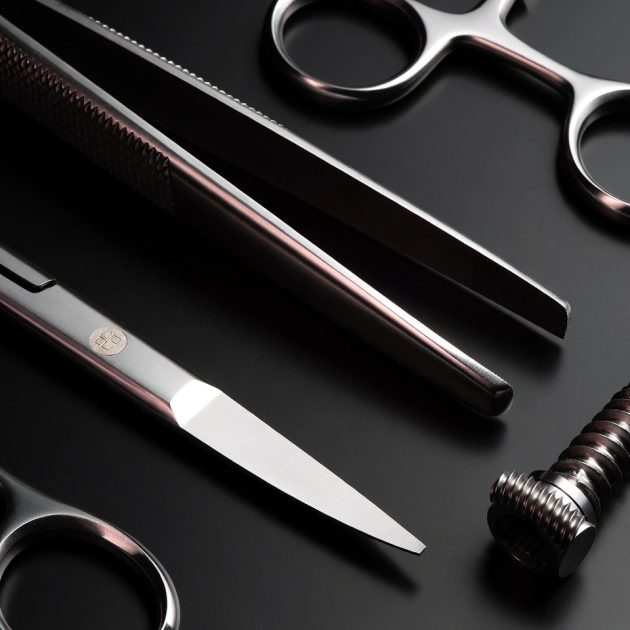
The steel grade used in a surgical instrument determines its hardness, edge retention, corrosion resistance, and clinical lifespan. Understanding the differences between AISI 420, 440C, and 316L helps procurement officers specify correctly and verify supplier claims.
Three Principal Steel Grades Compared
| Property | AISI 420 | AISI 440C | AISI 316L |
|---|---|---|---|
| Steel type | Martensitic | Martensitic | Austenitic |
| Chromium content | 12–14% | 16–18% | 16–18% |
| Carbon content | 0.15–0.40% | 0.95–1.20% | ≤0.03% |
| Hardness (after heat treatment) | 46–52 HRC | 56–60 HRC | Not hardened |
| Edge retention | Good | Excellent | Poor (too soft) |
| Corrosion resistance | Good | Very good | Excellent |
| Magnetic? | Yes (after HT) | Yes (after HT) | No |
| Autoclavable | Yes | Yes | Yes |
| Relative cost | Low | Medium | Medium-high |
Which Grade for Which Instrument?
AISI 420 — Standard Grade (Most Surgical Instruments)
Used for: haemostatic forceps, tissue forceps, needle holders, retractors, towel clamps, trocars, obstetrical instruments, most general surgical instruments, dental extraction forceps, root elevators, impression trays. The go-to grade for the majority of the surgical instrument catalogue. Balances hardness, corrosion resistance, and cost at scale.
AISI 440C — Premium Cutting Grade (Sharp Instruments)
Used for: surgical scissors (all types), scalpel handles, micro scissors, ophthalmic scissors, nail scissors, cuticle scissors, hair scissors. The higher carbon content allows 440C to achieve HRC 58–60 — essential for instruments that must hold a sharp cutting edge through repeated sterilization cycles.
AISI 316L — Implant and High-Corrosion Grade
Used for: bone plates, screws, implants, instruments that contact body fluids for extended periods. 316L cannot be hardened, so it is unsuitable for cutting instruments. Not used for most hand-held surgical tools.
Lower Grades to Avoid
| Grade | Problem | Risk |
|---|---|---|
| AISI 410 (9–11% Cr) | Lower chromium than 420 — less corrosion resistant | Instruments rust faster in clinical use |
| AISI 202 / 304 (austenitic, non-hardenable) | Cannot be hardened — used in cheap consumer scissors | Will not maintain a surgical-quality edge |
| Un-specified "stainless steel" | No grade designation provided by supplier | Quality cannot be verified — request MTR |
How to Verify Steel Grade
- Chemical Analysis (XRF) — X-ray fluorescence spectrometry confirms chromium, carbon, and alloy composition. Should match AISI grade specification.
- Hardness Test (Rockwell HRC) — AISI 420 instruments: 46–52 HRC. AISI 440C instruments: 56–60 HRC. Ask for the test certificate.
- Corrosion Test — Salt spray test (ISO 9227) or saline immersion. Instruments should show no rust after 72hr salt spray at 5% NaCl concentration.
- Material Test Report (MTR) — Reputable manufacturers provide MTRs confirming the steel composition batch by batch. Request this for every new product.
Pintech Steel Specification: All Pintech instruments are manufactured from AISI 420 (general instruments) and AISI 440C (cutting instruments — scissors, scalpels). Material Test Reports, SIMAP hardness test certificates, and corrosion resistance test results are available on request for all product lines.