
Sourcing Standard and Non-Scalpel Vasectomy (NSV) Instruments for Clinic Distribution
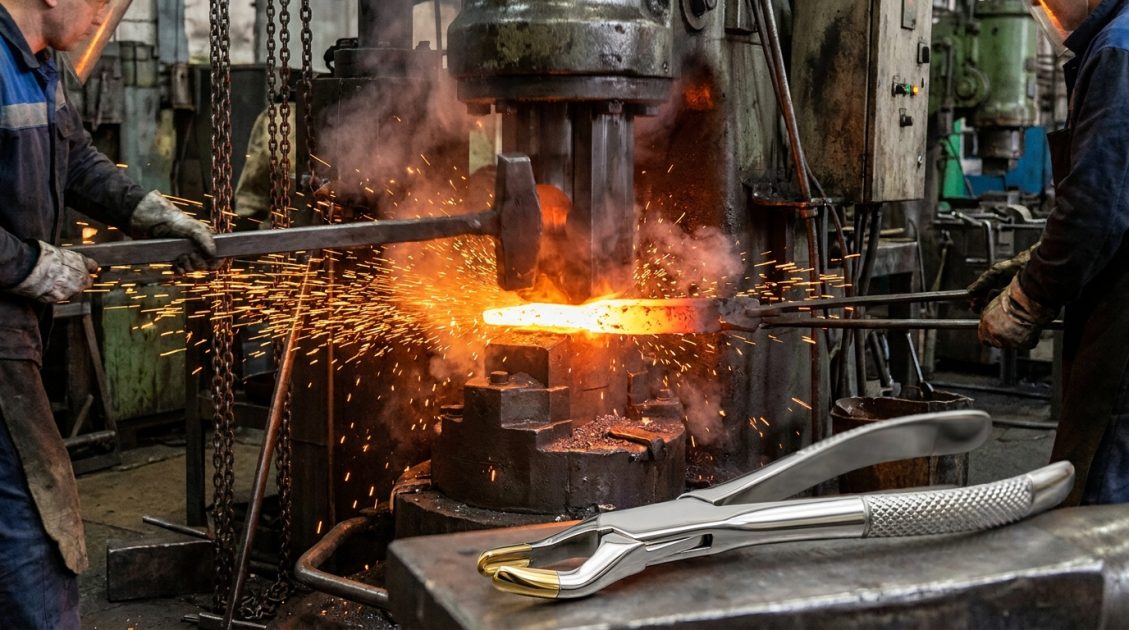
Sourcing Standard and Non-Scalpel Vasectomy (NSV) Instruments: A Technical Procurement Blueprint for Global Medical Distributors
The global urological device market is undergoing a significant operational shift. For medical distributors, hospital procurement networks, and specialized urology clinic suppliers, the transition toward minimally invasive surgical procedures has fundamentally altered inventory requirements. At the forefront of this shift is the Non-Scalpel Vasectomy (NSV)—a procedure that has rapidly become the clinical gold standard due to reduced patient trauma, lower infection rates, and accelerated recovery times.
However, the NSV technique completely eliminates the use of standard surgical scalpels, relying entirely on highly specialized, precision-engineered vasectomy instruments. For a distributor, procuring these specific kits requires more than just browsing a standard medical catalog. It demands a direct partnership with a specialized manufacturer capable of executing exact jaw alignments, specific ring diameters, and rigorous metallurgical passivation protocols. This comprehensive blueprint provides a technical breakdown of the engineering, regulatory compliance, and supply chain logistics required to source premium vasectomy tools directly from the factory floor.
1. The Clinical Shift: From Traditional to Non-Scalpel Vasectomy
To understand the manufacturing requirements of these instruments, procurement officers must first understand the mechanical differences in the clinical application.
In a traditional vasectomy, the surgeon utilizes a standard scalpel (typically a No. 15 blade) to make two distinct bilateral incisions in the scrotum. The vas deferens is then manually isolated using standard hemostatic forceps or Allis tissue forceps, before being cut and cauterized. This method requires a broad array of standard surgical instruments that are common in any general surgical pack.
The Non-Scalpel Vasectomy (NSV), pioneered in China and widely adopted globally, is an entirely different mechanical process. Instead of cutting the skin with a blade, the surgeon uses a specialized ring clamp to secure the vas deferens externally through the scrotal skin. A uniquely sharp, pointed dissecting forceps is then used to puncture the skin and stretch the opening just enough to pull the vas deferens through. This technique minimizes bleeding and tissue trauma but places a massive mechanical burden entirely on two highly specialized instruments.
2. Technical Specifications of NSV Instrumentation
A standard NSV procedure kit relies heavily on the structural integrity of its two primary tools. Distributors must ensure that their manufacturing partner adheres to strict dimensional tolerances, as a slight deviation in the milling process can result in tissue slippage, incomplete isolation, or unnecessary trauma.
2.1 The Extracutaneous Ring Fixation Forceps
The extracutaneous ring fixation forceps (often referred to simply as the vasectomy ring clamp) is the foundational tool of the NSV procedure. Its primary function is to isolate and secure the vas deferens through the intact scrotal skin without piercing or crushing the tissue.
Cantilever Design and Ring Calibration: The structural design of the ring clamp utilizes a specialized cantilever mechanism. The jaws terminate in a circular ring, and the internal diameter of this ring is the most critical metric in the instrument's production. True manufacturing facilities calibrate this internal diameter strictly between 3.5mm and 4.0mm. If the ring is milled too large (e.g., >4.5mm), the vas deferens will slip during isolation, forcing the surgeon to re-clamp and causing patient bruising. Conversely, if the ring is milled too small (e.g., <3.0mm), it risks causing tissue necrosis or crushing the vas deferens prematurely.
Atraumatic Inner Grip: The inner surface of the ring must provide a secure grip without acting as a cutting edge. This requires a smooth, atraumatic finish. During the final factory finishing stages, the inner ring is micro-polished to remove any burrs or sharp edges left over from the CNC milling process. This ensures that when the ratchet mechanism is locked, the clamp holds the tissue firmly by compression rather than laceration.
Ratchet Tension: Similar to a standard Pean or hemostatic clamp, the ring forceps utilize a locking ratchet. Because the vas deferens is a thick, muscular tube, the ratchet must engage smoothly and hold maximum tension without the shanks of the instrument bowing outward. We engineer our shanks with a specific elastic memory, allowing them to absorb the compressive force while keeping the ring perfectly aligned.
2.2 The Sharp Vasectomy Dissecting Forceps
The second critical component is the NSV dissecting forceps. Unlike standard dissecting tools or mosquito hemostats which feature blunt or rounded tips, the NSV dissecting forceps feature finely honed, aggressively sharp-pointed tips.
The Puncture and Spread Mechanic: The surgeon uses the closed tips of this forceps to pierce the scrotal skin and the underlying vas sheath directly down to the vas deferens. Once the puncture is made, the surgeon forcefully opens the jaws of the forceps to stretch the tissue, creating a small, exact opening without the use of a scalpel.
Box Joint Tolerance and Lateral Play: Because the instrument is used to both puncture (closed) and stretch (opening against tissue resistance), the central hinge—the box joint—must be engineered with absolute precision. We mill our box joints out of solid steel forgings with a tolerance of ±0.02mm. There must be zero lateral play. If the jaws wobble under pressure, the puncture will be imprecise, and the tips may cross when the surgeon attempts to spread the tissue, entirely defeating the purpose of the minimally invasive technique.
Tip Geometry: The tips must be ground to a precise angle that facilitates skin penetration without being as fragile as a hypodermic needle. The outer edges of the jaws are often subtly rounded so that when the instrument is opened to stretch the tissue, it tears the fascia along natural tissue planes rather than slicing it irregularly.
3. Metallurgy and the Reprocessing Lifecycle
Because vasectomy tools are utilized in delicate, highly vascular regions and are subjected to repeated, rigorous sterilization cycles, they must be forged from premium-grade alloys. Low-grade steel will rapidly corrode, pit, or lose its structural rigidity, leading to catastrophic instrument failure during a procedure.
3.1 Martensitic Stainless Steel Selection
For high-stress surgical instruments requiring sharp tips and rigid clamping force, austenitic stainless steels (like the 300 series used in hospital trays) are insufficient. Instead, vasectomy instruments are forged using high-carbon martensitic stainless steel, specifically within the American Iron and Steel Institute (AISI) 410 or 420 series.
The carbon content within the 420 series allows the raw forging to be subjected to intense vacuum heat treatment. The metal is heated to over 1000°C to dissolve the carbon into the iron matrix, then rapidly quenched with nitrogen gas. This traps the carbon, transforming the steel into a highly stressed, incredibly hard martensitic structure. Subsequent tempering relieves the brittleness, resulting in a final hardness profile of 42 to 46 on the Rockwell C scale (HRC). This exact hardness ensures the sharp tips of the dissecting forceps do not blunt after initial use, and the ring clamps do not warp under clamping pressure.
3.2 Chemical Passivation and Corrosion Resistance
Following the final grinding and polishing phases, the instruments must undergo strict chemical passivation. According to international standards such as ASTM A967, the tools are submerged in a temperature-controlled nitric or citric acid bath. This process dissolves microscopic particles of free iron left on the surface from the manufacturing tools.
Once the free iron is removed, the concentrated chromium at the surface of the steel reacts with oxygen to form a continuous, microscopic layer of Chromium Oxide ($Cr_2O_3$). This passive layer acts as an impenetrable shield against the harsh, high-temperature steam and caustic enzymatic cleaners used in hospital autoclaves. A vasectomy kit that skips this crucial step will show signs of red rust after only a few reprocessing cycles.
4. Importing Pakistan Surgical Instruments: The Sialkot Advantage
When medical brands source bulk inventory, importing directly from a specialized manufacturer in Sialkot, Pakistan provides total control over the supply chain. Sialkot produces over 70% of the world's hand-held surgical and dental instruments, serving as the primary OEM backbone for major European and American medical brands.
By bypassing regional trading companies and sourcing direct from a factory like Pintech Instruments, corporate distributors unlock several critical advantages:
- Direct Technical Oversight: Distributors communicate directly with the engineers milling the box joints and calibrating the ring diameters, ensuring custom modifications can be implemented immediately.
- Superior Wholesale Margins: Removing the domestic middleman allows medical supply companies to acquire premium, ISO-certified instruments at factory-direct pricing, significantly increasing profit margins on procedural kits.
- Scalable Production: Whether a distributor needs 500 standard vasectomy kits for a regional clinic network or 5,000 customized NSV kits for an international government health initiative, the Sialkot infrastructure is built to scale rapidly.
5. OEM Private Labeling and Laser Marking Compliance
In the modern medical device sector, branding is an essential component of clinical trust. Distributors frequently leverage our private label manufacturing services to market instruments under their own proprietary brand names. However, applying a logo to a surgical instrument requires strict technical adherence to preserve the integrity of the steel.
5.1 The 1:10 OEM Scaling Rule
Many low-tier factories utilize high-power laser etching machines without considering the thermodynamic impact on the steel. Excessive laser heat creates a Heat-Affected Zone (HAZ) where chromium carbides precipitate out of the metal matrix. This depletes the surface of the chromium necessary to maintain the passive oxide layer, leading directly to localized rust exactly where the logo is etched.
To prevent this, Pintech Instruments enforces a strict architectural rule across all OEM production: the custom logo size is strictly limited to a maximum 1:10 scale relative to the available flat image area on the instrument shank. This specific dimensional limitation ensures the thermal energy from the laser remains safely dispersed. The result is a crisp, dark, easily readable brand mark and UDI (Unique Device Identification) code that is completely free of grey thermal artifacts or micro-fissures, ensuring absolute clinical aesthetics and regulatory compliance.
6. Supply Chain Logistics: From Factory to Global Distribution
Manufacturing a perfect instrument is only half the battle. Enterprise-level B2B sourcing requires a logistics workflow that guarantees those instruments arrive safely at your distribution hub, fully cleared by customs, and ready for immediate catalog integration.
6.1 Smart Carton Grouping and Protective Packaging
Vasectomy dissecting forceps possess incredibly sharp, delicate tips. If these instruments are bulk-packed loosely, the tips will impact one another during ocean or air transit, resulting in blunted points before the product even reaches the distributor. We utilize "Smart Carton Grouping" for all surgical shipments. Every sharp instrument is capped with a specialized silicone tip protector. The instruments are then individually sealed in anti-moisture polyethylene sleeves before being grouped into rigid inner boxes. This meticulous packing architecture minimizes volume overhead while guaranteeing zero transit damage.
6.2 Automated Proforma Invoicing and Export Documentation
International medical device imports are heavily regulated by customs agencies. Delays at the border severely disrupt distributor inventory cycles. To ensure seamless clearance, our digital infrastructure generates automated, highly detailed proforma invoices and commercial documents. Every shipment includes precise Harmonized System (HS) tariff codes, verified country of origin documentation, and the necessary Declaration of Conformity (DoC) linking the batch back to our ISO 13485 quality management system.
7. Standard vs. Premium: Selecting the Right Vasectomy Tools
When curating an inventory catalog, procurement officers must balance cost with clinical utility. While standard surgical sets are adequate for traditional procedures, the modern urologist demands purpose-built NSV instruments. By partnering with a verified manufacturer, distributors can confidently supply clinics with tools that enhance surgical precision, reduce operating room time, and ultimately improve patient outcomes.
From the precise 3.5mm calibration of the ring fixation forceps to the zero-tolerance milling of the dissecting forceps' box joint, every metric matters. In the highly competitive medical supply sector, the distributors who provide structurally flawless, reliable instrumentation are the ones who secure long-term hospital contracts and clinical loyalty.