
The Distributor's Guide to Importing Dental Instruments into the EU: Navigating MDR, EUDAMED, and UDI-DI Compliance
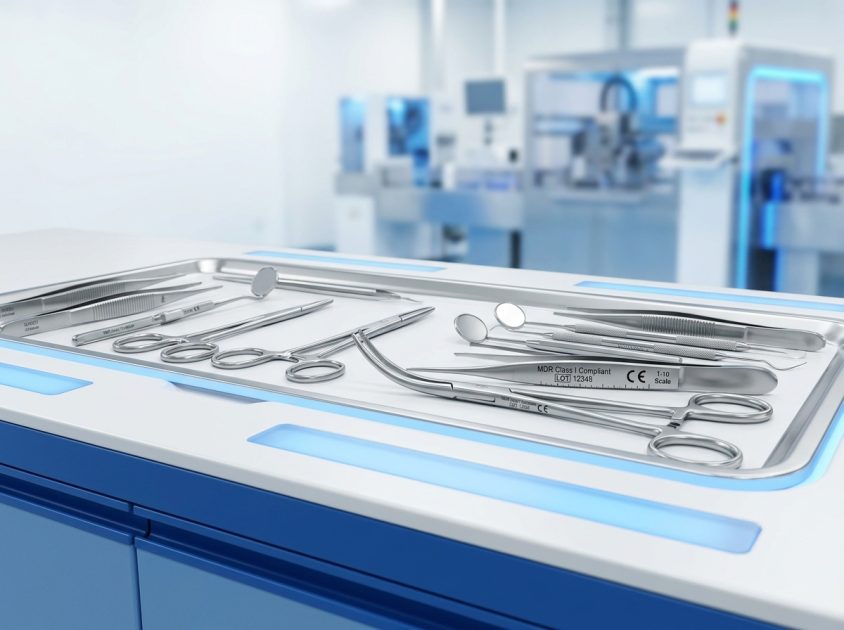
The Definitive B2B Sourcing Guide: Importing EUDAMED-Registered Dental & Surgical Instruments into the European Union
The landscape of international medical procurement has undergone a seismic shift. For European dental dealers, corporate procurement officers, and global medical supply distributors, sourcing high-quality stainless steel instruments is no longer simply an evaluation of metallurgy, craftsmanship, and competitive bulk pricing. It is now entirely dictated by strict regulatory traceability and data compliance.
Under the stringent enforcement of the European Medical Devices Regulation (MDR 2017/745), the act of importing non-compliant medical hardware carries immense legal, financial, and operational risk. The previous European Medical Device Directive (MDD) has been completely replaced, fundamentally changing how instruments are categorized, validated, and tracked. If your manufacturing partner lacks a verified, technically sound infrastructure within the European Database on Medical Devices (EUDAMED), your entire supply chain is vulnerable to immediate customs seizures and distribution blocks.
This comprehensive guide details the rigorous technical and operational frameworks required for seamless importation. It outlines the specific compliance pillars—from Class Ir device validations and EN ISO 17664 reprocessing standards to the intricate data architecture of UDI-DI assignments and XML bulk uploads.
1. The Sialkot Manufacturing Hub in the MDR Era
For decades, Sialkot, Pakistan has served as the undisputed global backbone for surgical and dental instrument manufacturing. The region produces millions of precision instruments annually, supplying the world’s leading medical brands. However, the modern B2B procurement framework demands far more than traditional forging and hand-crafted precision. It requires an ironclad, structural compliance foundation.
When vetting an OEM dental instruments manufacturer in Pakistan, international compliance officers must look beyond the factory floor. They must evaluate a verified data pipeline that satisfies European economic operator requirements. A certified export facility must act as a fully transparent partner, maintaining a traceable workflow that links raw material heat numbers, forging logs, and passivation chemical records directly down to individual product serialization codes.
2. Understanding EU MDR 2017/745 for Dental and Surgical Instruments
The transition from the old MDD framework to the current MDR framework eliminated the "grandfathering" provision; previously approved legacy devices must be entirely recertified under the new, stricter rules. For dental and surgical wholesalers, understanding how these rules apply to the specific tools you import is critical.
2.1. The Class Ir (Class I Reusable) Designation
Most precision dental and surgical tools—including extraction forceps, scalers, bone rongeurs, and surgical scissors—are classified under the MDR as Class I Reusable (Class Ir) devices. The MDR defines a reusable surgical instrument as an instrument intended for surgical use in cutting, drilling, sawing, scratching, scraping, clamping, retracting, clipping or similar procedures, without a connection to an active device, and intended to be reused after appropriate procedures.
Historically, under the old MDD regulations, basic reusable surgical instruments did not require the involvement of a third-party Notified Body, and manufacturers relied entirely on a self-drawn Declaration of Conformity. Under MDR, this is no longer a self-designation process.
2.2. The Role of the Notified Body in Article 52(7c)
For Class Ir devices, the regulatory landscape has become far more rigorous. Article 52(7c) of the EU MDR mandates that manufacturers of reusable surgical instruments must follow the stringent quality and technical procedures set out in Chapters I and III of Annex IX, or in Part A of Annex XI.
Crucially, for these specific Class Ir products, the involvement of a Notified Body is now mandatory. However, their assessment is highly specialized: the Notified Body involvement is required only regarding the aspects relating to the reuse of the device, in particular cleaning, disinfection, sterilization, maintenance, and functional testing, as well as the related instructions for use (IFU). This means your manufacturing partner must maintain an exhaustive Technical File that clearly demonstrates the safety and efficacy of these reprocessing methods.
3. Reprocessing Validations and EN ISO 17664 Standards
Because these instruments are utilized in highly sensitive, sterile environments like oral surgery and orthopedic operating rooms, the risk of cross-contamination is a primary regulatory focus. At the same time, in order to avoid infection or cross-contamination, it is vital for patient safety that whenever medical devices are to be used sterile, they actually are sterile.
3.1. Cleaning, Disinfection, and Sterilization Protocols
To showcase the efficacy of a reusable device, manufacturers must prove that post-usage processing does not affect the device's acceptance criteria. It is absolutely essential to conduct a cleaning validation, which verifies that both manual and mechanical cleaning methods allow for the effective and safe reprocessing of the medical device.
Compliance with these stringent reprocessing requirements is typically assessed using the EN ISO 17664 standard, titled “Sterilization of medical devices - Information to be provided by the manufacturer for the processing of resterilizable medical devices”. Proper adherence to this standard requires deep technical documentation. Manufacturers must simulate worst-case conditions, incorporate worst-case devices, and ensure the selection of clinically relevant test soils during their validation studies.
3.2. Technical Durability and Lifecycle Testing
Every batch of instruments must withstand intense thermal and chemical stressors. High-grade martensitic and austenitic stainless steels are subjected to repeated autoclave cycles. The validation process must include accumulation cycles, assess recovery efficiency, and utilize two or more suitable cleaning endpoint markers to guarantee that the instrument's surface remains uncompromised. If a manufacturer improperly bundles a validation study or fails to provide adequate documentation, it can lead to significant time and financial setbacks, resulting in severe delays in reaching the market.
4. Mastering EUDAMED: Data Structures and Registration Pipelines
A seamless B2B distribution partnership relies on automated data integrity. Corporate buyers cannot afford to manually register thousands of individual stock-keeping units (SKUs) or untangle messy compliance paperwork. Your Sialkot manufacturing partner must possess the internal IT capability to execute complex data uploads directly to the European Database on Medical Devices (EUDAMED).
From May 2026, the use of the UDI/Device module becomes mandatory, and manufacturers placing MDR devices on the EU market must register their device data in EUDAMED before placing them on the market.
4.1. Basic UDI-DI vs. UDI-DI: The Hierarchy of Traceability
The Unique Device Identification (UDI) system is the core mechanism used to track medical hardware globally. In the EUDAMED ecosystem, this data is structured hierarchically:
- Basic UDI-DI: This is the primary identifier and the main key used in the EUDAMED database. It is assigned to a group of devices that share the same intended purpose, risk class, and essential design characteristics.
- UDI-DI (Device Identifier): A static, specific code tied directly to a particular, unique instrument model or variant (e.g., a specific 15cm curved Mayo scissor).
- UDI-PI (Production Identifier): The dynamic code tracking the specific production lot, manufacturing date, and batch characteristics.
In EUDAMED, device registration in the UDI/Devices module specifically means registering a device at the level of the device identifier (UDI-DI); production identifiers (UDI-PI) are not required in the database. UDI/Device registration involves over 100 individual data elements that must be considered, including the Basic UDI-DI, the UDI-DIs, device descriptions, risk classifications, certificates, EMDN codes, and related regulatory attributes.
4.2. Bulk XML Uploads and Technical Integration
For a manufacturer handling hundreds of different dental forceps, explorers, and surgical retractors, manual data entry quickly becomes inefficient and highly error-prone. To solve this, EUDAMED allows for bulk uploads via XML files.
A competent manufacturing partner utilizes the POST service provided by EUDAMED, which allows manufacturers to generate the XML files themselves for a bulk upload. These XML files must be strictly compatible with EUDAMED's XSD schema. Up to 300 Basic UDI-DI / UDI-DI pairs can be uploaded within a single XML file, allowing for rapid, batch-wide registration of massive distributor catalogs. The manufacturer remains entirely responsible for the accuracy, completeness, and correctness of the device data submitted to EUDAMED.
5. Private Label Medical Instruments: The Art of Compliant Branding
Many elite dental wholesalers and medical supply brands require OEM services to market tools under their own brand identities. When custom private label manufacturing is implemented, the laser marking of identifiers becomes a highly technical requirement.
Laser markings must perfectly match the digital data structure. If a hospital procurement officer scans the physical tool's data matrix, it must instantly return the correct UDI-DI profile. Furthermore, the aesthetics of the branding must reflect the premium nature of the tool. At Pintech Instruments, we enforce strict design parameters for OEM branding: to preserve the structural integrity and aesthetic balance of the surgical steel, the logo size must not be more than a 1:10 scale of the image area. This ensures a pristine, highly readable black laser etch free of grey artifacts, maintaining the professional appearance expected in clinical settings.
6. Optimized Logistics: Smart Carton Grouping and Customs Clearance
Enterprise-level sourcing from Pakistan requires a logistics workflow that mirrors digital compliance. A high-efficiency B2B partnership must streamline the physical distribution process through technical order management:
- Automated Proforma Invoicing: To accelerate customs clearance, digital systems should automatically generate compliant proforma invoices complete with HS codes, country of origin documentation, and verified manufacturer registration numbers.
- Smart Carton Grouping: Bulk shipments must be logically packed and grouped into smart container configurations. This minimizes volume overhead, prevents damage to delicate instrument tips, and ensures that packing lists perfectly match container manifests for fast border processing.
- Declaration of Conformity (DoC): Every shipment must be accompanied by an easily accessible DoC that links directly back to the Notified Body's certificate and the EUDAMED database records.
7. Pintech Instruments: Your Specialized Manufacturing Partner
Navigating the complexities of Class Ir validations, EN ISO 17664 processing protocols, and EUDAMED XML data structures requires a dedicated, specialized partner. Pintech Instruments is not a generic tool factory; we are exclusively a dental and surgical instrument manufacturer. This specialization ensures that 100% of our quality control infrastructure, metallurgical sourcing, and regulatory compliance teams are focused entirely on medical device standards.
By partnering with a facility that proactively manages the entire MDR lifecycle—from raw material forging to Basic UDI-DI assignment and bulk XML database uploads—dealers and wholesalers can eliminate supply chain bottlenecks, guarantee EU customs clearance, and focus on scaling their distribution networks.