
Engineering Hemostasis: A Technical Breakdown of Kidney Pedicle and Pean Hysterectomy Clamps
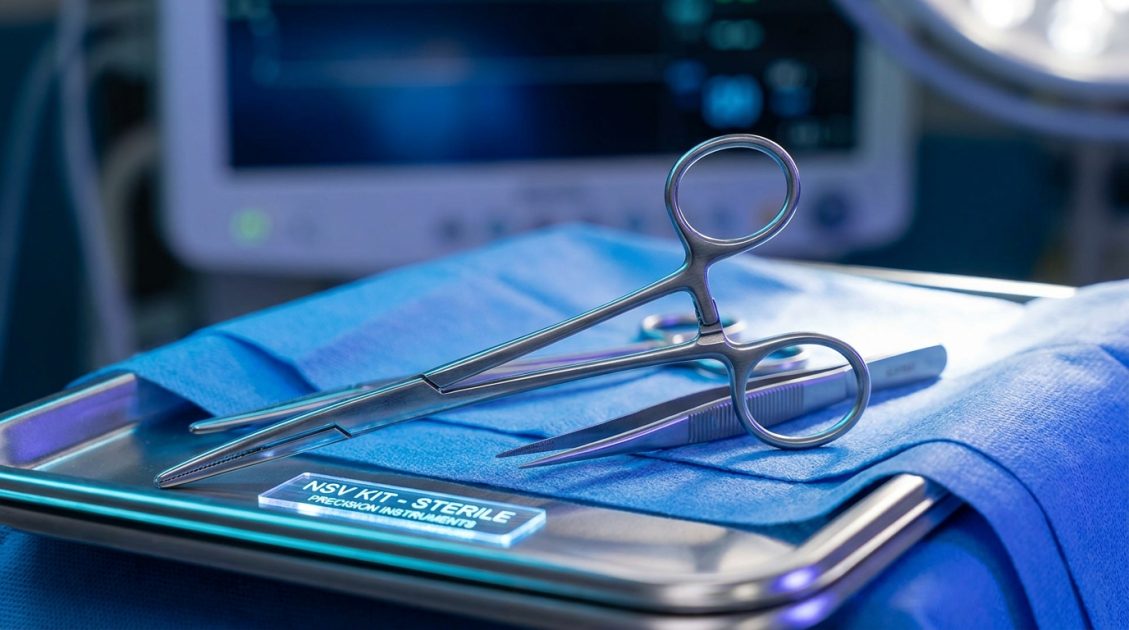
Engineering Hemostasis: Metallurgy, Jaw Occlusion Mechanics, and Stress Calibration in Heavy-Duty Hemostatic Forceps Production
For international medical device procurement officers, regional category managers, and enterprise surgical supply distributors, sourcing surgical instrumentation is an exercise in strict risk mitigation. In deep-cavity open surgeries—such as radical nephrectomies, retroperitoneal lymph node dissections, and abdominal hysterectomies—the mechanical integrity of hemostatic instruments is a direct variable in patient outcomes. Instrument failure during deep vascular occlusion is a catastrophic event, typically tracing back to preventable manufacturing defects: grain structure micro-fissures, inadequate passivation, or poor joint alignment.
When sourcing heavy-duty clamping instruments like kidney pedicle clamps and Pean hysterectomy clamps from the Sialkot manufacturing sector, relying on superficial product catalogs is insufficient. Procurement professionals require an ironclad understanding of the industrial engineering, metallurgical treatments, and dimensional tolerances executed on the factory floor. This comprehensive, technical blueprint analyzes the physical architecture, material science, and validation frameworks required to manufacture premium hemostatic forceps that satisfy both clinical expectations and international regulatory mandates.
1. The Metallurgy of Deep-Vascular Hemostatic Instruments
Surgical clamps designed for heavy tissue and vascular occlusion operate under continuous, high-tensile stress. The choice of raw material dictates the instrument's elastic limit, yield strength, and resistance to cyclic fatigue. Selecting the wrong grade of steel or improperly managing the thermal transformation cycle inevitably leads to instrument splaying, deformation, or structural failure at the ratchet or box lock.
1.1 Stainless Steel Grade Classifications
Premium surgical manufacturing relies primarily on specialized alloys within the American Iron and Steel Institute (AISI) martensitic and austenitic series. For instruments requiring sharp cutting edges or extreme structural rigidity under load—such as hemostatic clamps—martensitic stainless steel is the mandatory engineering choice. Specifically, AISI 410 and AISI 420 grades are utilized due to their high carbon content, which allows the metal to be significantly hardened through heat treatment.
| Elemental Component | AISI 410 Composition (%) | AISI 420 Composition (%) | Mechanical Contribution to Surgical Steel |
|---|---|---|---|
| Carbon (C) | 0.08 – 0.15 | 0.15 – 0.40 | Increases hardenability, tensile strength, and wear resistance post-thermal treatment. |
| Chromium (Cr) | 11.50 – 13.50 | 12.00 – 14.00 | Forms the critical passive chromium-oxide ($Cr_2O_3$) surface layer for corrosion resistance. |
| Manganese (Mn) | Max 1.00 | Max 1.00 | Deoxidizes the melt and improves structural integrity during hot forging. |
| Silicon (Si) | Max 1.00 | Max 1.00 | Improves casting fluidity and acts as a secondary ferrite stabilizer. |
The precise control of Carbon and Chromium ratios determines the carbide precipitation behavior within the steel matrix. If the chromium content drops below 11.5%, the alloy loses its ability to spontaneously regenerate its passive oxide layer, leading to rapid pitting corrosion inside standard hospital autoclaves.
1.2 Advanced Heat Treatment and Hardness Profiles
Raw forged steel is fundamentally too soft for clinical use, possessing an irregular, coarse grain structure. To convert the material into a high-tensile instrument, it must undergo a multi-stage thermal cycle inside controlled-atmosphere vacuum furnaces. This process completely transforms the underlying atomic matrix from ferrite/pearlite into a dense, homogenous martensite structure.
The optimal thermal transformation profile for heavy hemostatic forceps requires four distinct, highly controlled operational phases:
- Preheating Phase: The raw machined components are gradually heated to 750°C to prevent thermal shocking and minimize dimensional warping across asymmetric jaw geometries.
- Austenitizing Phase: The furnace temperature is elevated to approximately 980°C to 1040°C. At this threshold, carbon completely dissolves into the iron matrix, creating a uniform solid solution known as austenite.
- Quenching Phase: The components are rapidly cooled using high-pressure nitrogen gas. This rapid thermal drop forces the dissolved carbon to remain trapped within the changing crystal lattice, creating an intensely hard, highly stressed body-centered tetragonal structure called martensite.
- Tempering Phase: In its immediate post-quench state, martensitic steel is highly brittle and prone to shattering under stress. The components are therefore reheated to a precise window between 150°C and 200°C. This relieves internal crystalline stress, balancing the material's hardness with the elastic elasticity required to withstand cyclic clamp occlusion.
For kidney pedicle and Pean hysterectomy clamps, the final hardness profile must be calibrated within the rigid parameters of 42 to 48 on the Rockwell C scale (HRC). If the hardness drops below 42 HRC, the instrument jaws will deform permanently when clamping thick tissue bundles. Conversely, if the hardness exceeds 50 HRC, the box lock and ratchets become overly brittle and risk shattering under maximum hand tension.
2. Mechanical Architecture of the Pean Hysterectomy Clamp
The Pean hysterectomy clamp (frequently categorized within heavy Rochester-Pean lineages) is engineered to isolate, compress, and occlude dense, highly vascular adnexal tissue bundles and uterine ligaments. The physical stress applied to this instrument requires specific architectural tolerances during the machining and assembly processes.
2.1 Box Lock Engineering and Structural Play Elimination
The primary mechanical failure point in low-grade hemostatic forceps is lateral jaw movement, which directly causes tissue shearing rather than clean compression. This failure occurs when the central hinge—the box lock—is poorly engineered or sloppily milled.
A high-performance box lock requires an interlocking male-and-female slot configuration milled out of a single, solid steel forging. True manufacturers avoid welded or stamped components. The inner channel must be machined down to a tolerance of ±0.02mm. The male component must slide smoothly through the female slot without any perceptible side-to-side wobble. The two halves are permanently joined using a precision-ground stainless steel hinge pin. This pin must be swaged and flush-ground seamlessly into the outer instrument frame. If the pin is improperly hardened relative to the surrounding clamp body, it will wear down unevenly over time, creating a loose gap that allows the jaws to cross and misalign under load.
2.2 Jaw Serration Profiles and Retention Mechanics
The jaw surface of a Pean hysterectomy clamp features deep, distinct transverse serrations extending across the entire length of the working end. These serrations are not purely decorative; they are carefully calibrated friction vectors.
During the milling process, the serration pitch (the distance between individual ridges) and depth must be machined uniformly. The tooth profile must form a distinct V-shape with apex angles tailored to grip wet, slippery ligated tissue without slicing through the vessel walls. Critically, when the instrument is closed to the first ratchet position, the teeth of the upper jaw must seat perfectly into the matching grooves of the lower jaw. Any deviation or offset in the tooth alignment reduces the surface-to-surface contact area, creating localized high-pressure zones that cause tissue necrosis or vessel rupture.
2.3 Deflection Calibration and Shanke Elasticity
The long shafts connecting the finger rings to the box lock are known as the shanks. The shanks act as mechanical leaf springs. When a surgeon engages the ratchet locking mechanism, the shanks must bow slightly inward, accumulating elastic tension that exerts continuous downward force onto the jaw tips.
This structural deflection must remain strictly within the elastic deformation zone of the calibrated steel matrix. When the ratchets are disengaged, the shanks must spring back completely to their original linear alignment. If the shanks suffer from permanent plastic deformation, the clamp loses its compression force, rendering the instrument useless for reliable vessel occlusion.
3. Deep-Cavity Navigation: The Architecture of Kidney Pedicle Clamps
While Pean clamps focus on raw vertical crushing force within the pelvic basin, kidney pedicle clamps are engineered for deep, targeted retroperitoneal isolation. Sourcing these tools requires an evaluation of complex jaw curvatures and specialized occlusion behaviors designed for major arterial systems.
3.1 Double-Curved Geometry and Access Vectoring
The renal pedicle—consisting of the renal artery, renal vein, and ureter—is located deep within the retroperitoneal space, surrounded by dense anatomical structures. Standard straight or simple curved forceps cannot safely clear these boundaries to isolate the vessel bundle.
To overcome this barrier, kidney pedicle clamps (such as the Stille, Guyon, or Herrick variations) are engineered with a specialized double-curved or S-shaped profile. This geometric configuration permits the surgeon's hand and the instrument shanks to remain completely outside the direct line of sight, while the jaw tip curves smoothly around the posterior aspect of the vascular pedicle. Machining these complex, multi-axis curves requires multi-axis CNC milling machines paired with hand-finishing processes to ensure that weight distribution remains balanced along the entire length of the instrument.
3.2 Atraumatic Longitudinal Serrations and Occlusion Calibration
Unlike the crushing transverse teeth of a hysterectomy clamp, a kidney pedicle clamp must achieve absolute vascular security without destroying the structural wall of the renal artery or vein. This requirement necessitates an atraumatic or semi-atraumatic jaw profile.
Many premium pedicle clamps utilize deep longitudinal serrations, often combined with a central groove or a fine interlocking pattern. This design distributes the compression force uniformly over a wider surface area, preventing focal stress concentration on the delicate tunica intima layer of the blood vessels. The occlusion profile must follow a strict sequential path: when the forceps are closed, the jaw tips must make contact first. As the user engages subsequent teeth on the ratchet mechanism, the compression must migrate smoothly from the distal tip down to the proximal box lock. This tip-first closure ensures that the blood vessel cannot slip forward out of the jaws as the instrument is locked into place.
3.3 Ratchet Engagement Metrics and Mechanical Security
The ratchet mechanism located just above the finger rings maintains the clamping force without manual hand pressure. For major arterial clamps, the ratchet teeth must be machined with a distinct back-cut angle (typically between 5° and 8°) to prevent accidental disengagement if the instrument is bumped during surgery.
The step-up tension between individual ratchet teeth must follow a linear progression. The force required to advance from the first ratchet position to the maximum locking position must be smooth and tactile, requiring distinct, predictable increments of hand pressure. A soft or mushy ratchet indicates poor tooth geometry or inconsistent heat treatment, creating an unacceptable risk of unexpected intraoperative unlocking.
4. Technical Quality Control and Passivation Standards
An beautifully machined instrument can still fail completely if its surface finishing and chemical passivation processes are neglected. For any specialized surgical instruments manufacturer in Pakistan, the final finishing steps are what separate reliable, export-ready medical devices from low-grade alternatives.
4.1 Surface Texturing: Satin vs. Mirror Finish
Surgical instruments are exposed to high-intensity overhead operating room lights. Highly polished, mirror-finished steel surfaces create intense glare that leads to surgeon's eye strain and obscures visualization within deep surgical fields. Therefore, heavy hemostatic forceps require a uniform satin or matte surface finish.
This matte texture is achieved by blasting the raw polished steel with micro-fine glass beads or aluminum oxide particles at calibrated pressures, or by utilizing specialized automated chemical satinizing baths. The resulting microscopic surface texturing diffuses incoming light rays evenly, providing a reflection-free working profile while maintaining a smooth surface texture that resists biological soil adhesion.
4.2 The Chemical Passivation Process
Machining, grinding, and tumbling operations inevitably leave microscopic particles of free iron and tool steel embedded across the instrument's surface. If these free iron particles are left exposed to atmospheric oxygen and moisture, they oxidize rapidly, forming localized galvanic cells that trigger severe rust and pitting corrosion.
To prevent this, all precision surgical instruments must undergo a strict chemical passivation process, conforming directly to international standards such as ASTM A967 or ISO 16061. The process involves two primary stages:
- Nitric or Citric Acid Bath: The thoroughly degreased instruments are fully immersed in a temperature-controlled bath of nitric acid (typically 20% to 30% volume at 50°C) or formulated citric acid solutions. This acid treatment selectively dissolves all free iron particles from the surface matrix without attacking the underlying Chromium-Iron alloy.
- Chromium Oxide Formation ($Cr_2O_3$): By removing the free iron, the local ratio of Chromium at the absolute surface layer increases dramatically. When exposed to clean air or secondary oxidizing rinses, this chromium reacts instantly with oxygen to form a continuous, microscopically thin passive layer of Chromium Oxide ($Cr_2O_3$).
This passive barrier is what makes the underlying steel "stainless." It acts as an impenetrable shield that blocks water molecules and chloride ions from reaching the vulnerable iron atoms beneath, ensuring the clamp can survive thousands of repeated enzymatic wash and autoclave cycles.
4.3 Verification Testing for Structural Integrity
Before batch release, high-authority export facilities subject their hemostatic forceps to destructive and non-destructive stress testing to guarantee structural reliability:
- Boil Testing (ASTM A380): Instruments are immersed in boiling distilled water for 30 minutes, then allowed to cool and dry. Any appearance of red rust, streaks, or localized pitting indicates incomplete passivation or sub-standard raw steel, resulting in immediate batch rejection.
- Copper Sulfate Testing: A specialized chemical solution is applied directly to the metal surface for a set period. If free iron is present, a visible copper film deposits onto the surface, exposing gaps in the passive layer.
- Deflection Stress Testing: Clamps are locked onto a hard rubber mandrel at maximum ratchet capacity for 24 continuous hours. Post-test, the shanks must show zero permanent deformation, and jaw alignment must remain dead-center.
5. B2B Private Labeling and OEM Compliance Frameworks
Global surgical brands and major medical distribution networks routinely leverage direct-to-factory wholesale and private label manufacturing services to build and scale their proprietary instrument lines. However, laser branding on high-tensile surgical steel must follow strict technical constraints to avoid introducing manufacturing flaws into the finished product.
Improper laser marking alters the local grain structure of the steel. Excessive laser heat creates a localized heat-affected zone (HAZ) where chromium carbides precipitate out of solution, leaving the metal depleted of free chromium and highly vulnerable to corrosion. To mitigate this risk, we enforce an absolute design limitation across all our OEM production lines: the custom logo size must not exceed a 1:10 scale relative to the available flat image area on the instrument shank or box lock. This strict parameter keeps the thermal energy density concentrated within safe limits, ensuring a clean, rich-black laser mark that remains perfectly legible through heavy sterilization cycles without introducing grey artifacts or micro-fissures into the underlying passivation layer.
6. Technical Integration for Global Medical Supply Chains
Enterprise procurement requires a seamless integration of physical manufacturing precision with modern digital logistics systems. Sourcing direct from a specialized manufacturing facility ensures that your supply chain benefits from structured B2B protocols:
- Smart Carton Grouping: To optimize transit stability and minimize volume overhead, bulk hemostatic forceps are grouped into logical, balanced container layouts. Delicate jaw tips and curved profiles are shielded with custom protective caps, and packing manifests are built to align perfectly with digital container routing data.
- Automated Proforma Invoicing: To streamline international customs clearance and avoid unexpected border delays, our backend infrastructure automatically generates compliant commercial documentation complete with precise international HS codes, country of origin data, and manufacturer registration identifiers.
- Regulatory Documentation Splicing: Every shipment is accompanied by detailed Technical Files, including raw material heat code analysis certificates, hardness validation logs, and verified Declarations of Conformity (DoC) linked directly to global medical device standards.